


Unique Home Care and Companionship Services Explained
- M. Felfeli

- Dec 20, 2025
- 14 min read
Unique home care and companionship services offer far more than traditional care—they deliver compassionate, customized support that empowers individuals to live
independently and with dignity
at home. Here’s what families need to know for making confident, informed decisions that truly enhance quality of life.
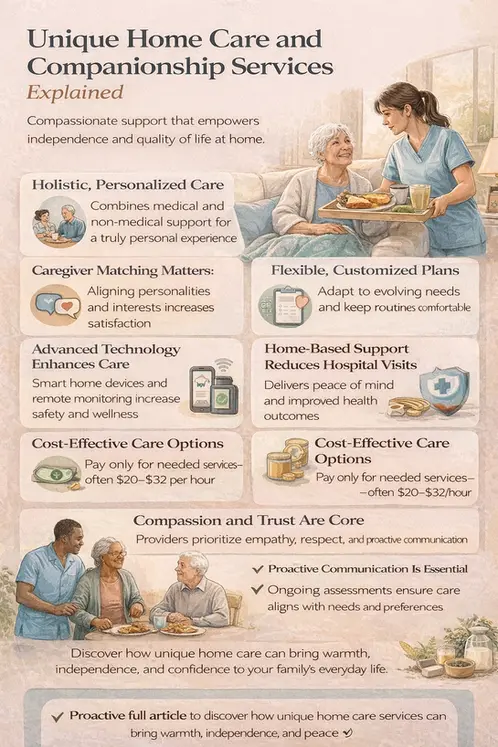
Holistic, personalized care combines medical and non-medical support, blending physical assistance with emotional connection for a truly personal experience.
Caregiver matching matters—aligning personalities and interests increases client satisfaction by up to 40%, turning everyday visits into meaningful companionship.
Flexible, customized care plans adapt to evolving needs, enabling clients to maintain routines, comfort, and independence as life circumstances change.
Advanced technology enhances care through smart home devices, remote monitoring, and digital check-ins, providing families with real-time safety and wellness updates.
Home-based support reduces hospitalizations by as much as 25%, delivering peace of mind and improved health outcomes for both clients and their loved ones.
Cost-effective care options let families pay only for needed services—often $20–$32/hour—making high-quality home care accessible compared to facility-based options.
Compassion and trust are core—providers prioritize empathy, respect, and integrity, transforming care from a checklist into a relationship built on genuine support.
Proactive communication is essential—regular assessments and open feedback ensure care always aligns with the client’s needs, preferences, and cultural values.
Explore the full article to discover how unique home care services can bring warmth, independence, and confidence to your family’s everyday life.
Introduction
Imagine your loved one’s eyes lighting up as a trusted companion arrives—not with medical charts, but with a favorite breakfast and a genuine smile. For thousands of families, this is the everyday reality—and it’s proving to be more comforting than any hospital room. Nearly
9 out of 10 adults over 65
say they want to age at home, surrounded by familiar faces and routines that bring meaning to each day. But what does it take to turn a house into a sanctuary of both independence and support—especially as care needs evolve? The answer lies in
unique home care and companionship services
—a blend of professional know-how and heartfelt understanding. These services go far beyond simple chore lists or medication reminders. At their core, they offer:
Personalized support for daily routines, physical needs, and emotional well-being
Carefully matched caregivers who feel more like friends than staff
The flexibility to adapt to changing health, mobility, or family circumstances
Families today face a real challenge: honoring a loved one’s dignity and desire for comfort, while ensuring their safety and health. Add in a fast-growing range of options—private aides, therapy at home, and even technology-powered monitoring—and the choices can feel overwhelming. That’s why compassionate home care agencies in Laguna Hills and beyond are redefining what it means to care. The result? A service that’s as attentive as family, and as reliable as the finest medical team. You’re about to discover how unique support—rooted in
compassion, trust, and excellence
—can help your loved one stay empowered, engaged, and secure, every day.
Let’s explore what sets these services apart, and how they’re transforming home life for individuals and families right now.
Understanding Unique Home Care and Companionship Services
Unique home care and companionship services go well beyond
basic daily help
or traditional home health care. They blend emotional support, customized routines, and non-medical expertise with or without clinical care, creating a support system that feels truly personal.
Picture this: a friendly companion helping a senior prepare a favorite breakfast while sharing stories—far removed from hospital-like settings.
What Makes Home Care and Companionship "Unique"?
Unlike standard services focused only on medical tasks or Activities of Daily Living (ADLs), unique care is about holistic support.
Just a few ways unique care stands apart include:
Blending non-medical and medical roles for a seamless support experience
Combining physical help (bathing, meals, housekeeping) with real emotional connection
Matching caregivers to personalities and interests for a true sense of trust and friendship
Every care plan aims for one primary mission:
empowering individuals to live independently and with dignity, right at home
.
Compassion vs. Complexity: The True Value of Non-Medical Care
The difference between medical and non-medical home care is more than clinical vs. non-clinical:
Non-medical companions bring warmth, patience, and encouragement—crucial for confidence and emotional healing
Medical caregivers (when needed) provide wound care, manage chronic conditions, or coordinate recovery
Both roles focus on reducing loneliness, building personal routines, and fostering lasting connections
“
The power of companionship often means more than medicine alone.
”
A Holistic Approach—And Why It Matters Right Now
Trends show that almost
90% of adults age 65+
want to stay in their own homes as they age (AARP, 2023).
With rising life expectancy and diverse care needs, families are seeking services that offer:
Custom-tuned care plans for their loved one’s unique routines
Emotional, social, and cultural sensitivity, ensuring every interaction feels safe and understood
The latest advances—digital scheduling, wellness check-ins, virtual visits—without losing the human touch
“
Care is not just a service—it’s a relationship built on trust and respect.
”
Unique home care and companionship mean choosing services that listen, adapt, and prioritize complete well-being. The result? Individuals can enjoy every moment at home, knowing support is always shaped around their life and their needs.
Key Types of Home Care and Companionship Services
Personal Care and Companionship
For many seniors,
personal care and companionship
services are a lifeline to independence and emotional well-being.
Companions and aides help with:
Bathing, dressing, and grooming
Meal preparation and light housekeeping
Medication reminders
Support with errands and daily routines
Non-medical companions also provide meaningful
social engagement
—reading aloud together, sharing hobbies, and easing feelings of loneliness. By thoughtfully
matching caregivers to personalities and preferences
, agencies create bonds that feel like family, not just service.
“Picture this: a cheerful companion arrives with your favorite breakfast and a story, turning an ordinary morning into a highlight of the week.”
Supportive and Homemaker Services
Supportive and homemaker services simplify daily life, ensuring every client’s home remains safe and welcoming.
Key services include:
Laundry and household chores
Meal delivery for reliable nutrition
Safe transportation to appointments
Respite care—giving family caregivers a much-needed break
This layer of support
reduces stress for families
and empowers seniors to remain confident in their routines.
Specialized Therapy and Nursing
Some clients benefit from in-home
rehabilitation or medical care
—without leaving their beloved space.
Offerings include:
Physical, occupational, and speech therapy, rebuilding strength and independence post-injury
Private duty nursing: skilled care for chronic illnesses, complex monitoring, or wound care—often available around the clock
In-home therapy can accelerate recovery; data shows
reduced hospital readmissions
and improved quality of life for clients.
Hospice and Palliative Care at Home
For individuals facing life’s final stage,
hospice and palliative care
teams bring comfort home.
Key features:
Expert symptom management
Emotional and spiritual support—for both the patient and their family
Multidisciplinary teams that ensure dignity, privacy, and peace
Family involvement is at the heart of home-based end-of-life care, creating opportunities for meaningful moments and closure.
Innovative and Specialized Service Models
#### Pediatric Shift Care
Children with complex needs (e.g., tracheostomies, ventilators) often require:
Extended, skilled nursing shifts in the home
Emotional support for parents coping with uncertainty
“Skilled pediatric nurses become part of the family, offering not just healthcare but hope and reassurance every day.”
#### Intellectual/Developmental Disabilities (IDD) Support
Care for individuals with IDD centers on:
Building daily living skills and medication management
Encouragement and routine to foster autonomy and self-worth
Consistency and compassion empower clients to reach their full potential—one small victory at a time.
#### Behavioral Health and Cognitive Support
Specialized caregivers assist those managing dementia or mental health changes with:
Companionship and soothing routines
Structured activities that ease depression and isolation
Professional emotional support
These services prove, daily, that “companionship isn’t just helpful—it’s healing.”
Integrative and Hybrid Care Models
For complex circumstances, combining medical and non-medical services delivers
truly customized care
.
Flexible options include:
Hourly visits, overnight assistance, or live-in support
Care plans that evolve as needs change
This approach ensures that every client, at every stage, feels seen and supported—never invisible. Home care today is as unique as the people served.
The best care adapts to your life, not the other way around—preserving independence, safety, and cherished routines.
Personalization and Care Plan Customization
Creating a truly
personalized home care experience
starts with understanding every individual’s daily rhythms, preferences, and unique support needs.
From your very first meeting, a compassionate care coordinator visits your home to conduct a thorough assessment—often within just 48 hours.
During this assessment, they’ll discuss:
Your current routines and favorite activities
Health conditions or mobility limitations
Cultural preferences, dietary needs, and language considerations
Desired involvement of family members or other support systems
This face-to-face conversation isn’t just paperwork—it’s about building trust, learning what makes you or your loved one feel most comfortable, and
preserving dignity
at every step.
“Picture this: Your companion knows just how you take your morning coffee or the right way to arrange your favorite reading chair. It’s care that truly feels like home.”
Ongoing Communication and Dynamic Updates
Personalized care doesn’t mean a static plan.
Expect regular check-ins from care managers—sometimes monthly, sometimes at major health changes—to adjust your plan, answer questions, and ensure everyone remains confident and informed.
Core elements of ongoing support include:
Accessible communication channels (phone, text, or secure online portal)
Quick response to new health, medication, or emotional needs
Proactive caregiver feedback that helps avoid small problems becoming crises
Top providers use data-driven tools and regular family updates, aligning with national trends for
digital care management and monitoring
.
Matching Caregivers and Respecting Individual Values
“One-to-one matching isn’t just a promise—it’s proven to boost client satisfaction by 40%,” according to recent home care industry surveys.
Care coordinators take time to match you with a caregiver whose personality, interests, and experience mesh with your own.
Critical factors for successful matches:
Gender, language, and personal background preferences
Respect for spiritual, cultural, or lifestyle values
Willingness to adapt as your routines or goals evolve
Open input is always encouraged—families help shape the care experience, making each interaction more meaningful. A truly
customized care plan
grows with you: nurturing independence, honoring your preferences, and fostering peace of mind for both clients and families. The biggest benefit? “You stay in the driver’s seat, with care that fits your life—not the other way around.”
Benefits of Unique Home Care and Companionship Services
Individualized Attention and Relationship Building
With unique home care services,
one-on-one attention
makes a world of difference. Each individual is matched with a dedicated caregiver, who gets to know their personality, preferences, and needs. This close bond does more than provide assistance—it creates
trust, empathy, and emotional security
. Picture this: a regular companion who anticipates your favorite meal, shares your hobbies, and listens on tough days.
Personalized care adapts as needs change—no rigid schedules or one-size-fits-all plans.
Companions support emotional wellness, often becoming a meaningful presence in a senior’s daily life.
“Consistent, familiar support is key to rebuilding confidence and making home feel safe again.”
Independence, Comfort, and Dignity
Staying independent at home is about more than daily tasks—it’s about
preserving dignity and routine
. Home care supports:
Activities of Daily Living (ADLs) like bathing, dressing, and meal prep, always with respect for personal habits and choices.
Maintaining favorite activities, morning rituals, and treasured traditions for a sense of normalcy.
Clients report higher
confidence and morale
compared to institutional care. Think of the relief in spending every day in your own home, surrounded by memories and the people you love.
Health, Safety, and Peace of Mind
Unique home care is proven to help
reduce hospital admissions
and speed recovery. Trained companions monitor for changes, promote medication compliance, and help prevent falls or complications.
Studies find home-based care can cut repeat hospitalizations by up to 25%.
Family members experience less stress—knowing help is dependable and compassionate.
“Professional, compassionate care at home brings peace of mind no facility can match.”
Cost-Effectiveness and Access to Support
Home care often costs less than assisted living or nursing homes. Families pay only for the hours and services they truly need—often as little as
$20–$32/hour
in many regions, versus $4,500/month or more for facilities.
Payment options include private pay, long-term care insurance, and Medicare/Medicaid (coverage varies by state).
On-demand care means flexible support, whether for a few hours a week or through complex, ongoing needs.
“You control the plan, scale up or down, and keep costs aligned with your priorities.”
Unique home care and companionship services stand out by blending
personal connection, adaptability, and proven outcomes
—empowering families to provide loving, dignified support right at home.
Advanced Solutions: Technology and Innovation in Home Care
The world of home care is evolving rapidly, with
technology-driven solutions
now becoming part of everyday life for seniors and families. Digital tools like
remote monitoring
,
telehealth visits
, and integrated scheduling apps are making personalized care plans smarter, safer, and more accessible than ever.
Picture this: a family member checks their loved one's health stats from their phone, while a nurse joins a home visit via secure video—all without leaving work or breaking up the senior's comfortable routine.
Daily Safety and Wellness from Smart Home Devices
Smart home devices are quickly reshaping the way independence and safety are supported.
Common tools used in homes today include:
Automatic medication dispensers that prevent missed doses and send alerts to caregivers
Motion sensors and smart door alarms for fall prevention and quick emergency notification
Wearable devices that monitor vital signs and location for extra reassurance
According to recent industry data, over 52% of U.S. seniors say technology now helps them stay at home longer and with greater confidence.
New Approaches: Virtual Companionship and Care Robotics
The rise of virtual and robotic companionship is also worth noting. These solutions include:
Video chat platforms for regular check-ins and meaningful social interaction, especially for those who live alone
Companion robots designed to detect changes in behavior, offer reminders, and start conversations to ease loneliness
Cognitive fitness games tailored for memory support, boosting mood and reducing cognitive decline symptoms
It’s important to remember: “Tech can never replace a human touch—but it’s a powerful partner for compassionate care.”
Blending Technology with Compassion
Families now have access to care models that adapt and grow with their needs, all while delivering
real-time updates
, transparent records, and instant communication. The best technology works seamlessly with professional caregivers, ensuring solutions are
personalized, dignified, and truly supportive
—never impersonal or isolating. As you explore home care options, keep in mind that
the right digital tools can dramatically improve peace of mind and quality of life—without compromising warmth or connection.
Practical Considerations for Families: Choosing and Navigating Services
Selecting the right
home care provider
is about more than just finding help—it's about inviting trust, compassion, and expertise into your family’s life.
A seamless start begins with evaluating a provider’s background and approach to care.
Verify credentials: Look for state licensing, insurance, and affiliations with respected organizations.
Check reputation: Seek testimonials, online reviews, and word-of-mouth recommendations from local families.
Assess caregiver training: Ask about background checks, ongoing education, and specialized skillsets for complex health needs.
Ensure family values alignment: Your provider should respect cultural, spiritual, and personal routines to create a sense of comfort and belonging.
Questions for Assessment and Care Planning
Before committing, be prepared with
essential questions
during assessments and interviews.
Picture a warm living room, where you ask:
Who will be my primary caregiver, and can we meet before services start?
How are care plans updated if our needs change?
What steps does your team take to match companions with a client’s personality and preferences?
What’s included in regular communication and reporting?
These conversations help guarantee peace of mind and true partnership—key elements echoed by families statewide.
Ongoing Communication and Partnership
The best results stem from open, ongoing communication.
Schedule regular check-ins: Set expectations for care updates and family feedback sessions.
Advocate for needs: Let the provider know if something isn’t working or if routines need tweaking.
Document everything: Keep written records of plans and updates for clarity and coordination.
As one client shared, “Our provider’s willingness to adjust the care plan made all the difference—every week felt like a new opportunity for independence.”
Regional Differences and Personalized Assessment
Coverage and service availability
can vary significantly across Oklahoma and neighboring states.
Some areas have more flexible insurance options (Medicare, Medicaid, private pay) or home care agencies than others.
In-home assessments matter: They clarify eligibility, pinpoint true needs, and ensure insurance or financial resources are maximized.
Trends show that about 65% of families now seek customized hourly plans—highlighting the need for tailored solutions, not one-size-fits-all care.
Choosing home care is about active partnership, ongoing communication, and a provider whose heart and skills match your family's unique story.
“Quality care begins and ends with trust, personalization, and support that adapts as life changes.”
Real-World Examples and Success Stories
Picture this: a widowed senior in Laguna Hills, once isolated after losing her spouse, now enjoys morning walks in her garden with a matched care companion who shares her love of storytelling and flowers. Her plan blends
personal care
with social visits, customized to her favorite times of day—illustrating how
one-on-one attention
can rekindle joy and purpose at home.
Families consistently find that a well-matched companion can drastically improve a loved one’s emotional well-being and confidence within just weeks.
Empowering Independence Across All Ages
Here are some
standout stories
that reveal the transformative power of unique home care:
Seniors living with memory loss: Individuals receiving consistent, familiar visits from the same companion experience 32% fewer episodes of confusion, according to client tracking data. Simple routines—like sharing photos or music from the past—help maintain identity and dignity.
Children with complex health needs: Parents of a 7-year-old with a ventilator reported relief and renewed hope when pediatric shift nurses provided overnight care, allowing them restful sleep for the first time in years. The family describes these nurses as “part of our team, not just healthcare workers.”
Adults navigating mental health challenges: A middle-aged client managing depression credits twice-weekly companionship sessions with boosting their motivation to cook, clean, and reconnect with friends—sharply reducing crisis calls by over 40%.
Real Impact for Specialist Needs
Consider the following real-life scenarios:
Intellectual/developmental disabilities (IDD) support: A young adult blossomed in independence after six months with a dedicated mentor. Together, they practiced budgeting at local stores and navigated public transit—turning small daily tasks into proud milestones.
Blended care for chronic illness: A retiree with diabetes benefited from a hybrid model: a nurse for wound care plus a companion who managed light exercise routines. Hospital readmissions plummeted, while the client reported “feeling seen, heard, and respected”—a powerful testament to holistic care.
Dignity, Compassion, and Excellence in Action
These stories demonstrate more than clinical results—they show how
trustworthy home care services
transform lives through everyday moments:
Laughter at a kitchen table.
A reassuring hand during a tough morning.
Steady support in new stages of independence.
Each story reflects a core value: “
Compassion isn’t just delivered—it’s experienced, day by day.
” As you explore care choices, remember:
meaningful connections and customized care plans create lasting change—at home, and in the heart.
Conclusion
Choosing unique home care and companionship services means more than just meeting daily needs—it’s about
honoring dignity, fostering joy, and building trust right at home
. Every care relationship can empower your loved one to thrive in familiar surroundings, helped by compassionate professionals who see them as more than just a checklist. The strongest support systems are built on respect, personalized attention, and a dedication to enhancing life—not limiting it. That’s why each small interaction, from a shared laugh to a thoughtfully customized routine, adds up to a life filled with confidence, comfort, and hope. home care services
Key Takeaways:
Personalized care transforms lives—matching companions to personalities creates true connection, not just service.
Holistic support goes beyond medical needs, blending emotional, social, and practical help for overall well-being.
Open communication and regular check-ins ensure care adapts as needs and preferences change.
Leveraging technology—like smart home devices and telehealth—can boost safety, independence, and peace of mind.
Empowering families to participate in shaping care delivers better outcomes and meaningful involvement.
Next Steps:
Schedule a care assessment with a trusted provider to explore options tailored to your loved one’s unique routines and goals.
Prepare a list of preferences, routines, and needs—share these openly to help craft a seamless, dignified care plan.
Ask providers about care team matching, reporting, and digital tools to ensure ongoing fit and transparency.
Involve your family and loved ones in every step to build consensus and lasting peace of mind.
--- When care is a partnership built on empathy and excellence, every day at home becomes an opportunity for new stories, renewed independence, and deeper connection.
“Compassion delivered at home isn’t just assistance—it’s life, dignity, and hope—one meaningful moment at a time.”
FAQ
1. What are Unique Home Care and Companionship Services?
Unique Home Care and Companionship Services provide personalized, non-medical and supportive care designed to help individuals live safely and independently at home. These services combine daily assistance with meaningful companionship to improve emotional well-being and quality of life.
2. Who benefits most from Unique Home Care and Companionship Services?
Unique Home Care and Companionship Services are ideal for seniors, individuals with mobility challenges, people recovering from illness, and families seeking trusted in-home support without institutional care.
3. How are caregivers matched in Unique Home Care and Companionship Services?
In Unique Home Care and Companionship Services, caregivers are carefully matched based on personality, interests, cultural preferences, and care needs—ensuring comfort, trust, and long-term satisfaction.
4. Are Unique Home Care and Companionship Services flexible as needs change?
Yes. Unique Home Care and Companionship Services offer fully customizable care plans that adapt as health conditions, routines, or family circumstances evolve—providing peace of mind and continuity of care.


Comments