


Private Home Care Agencies: What You Need to Know
- M. Felfeli

- Nov 5, 2025
- 13 min read
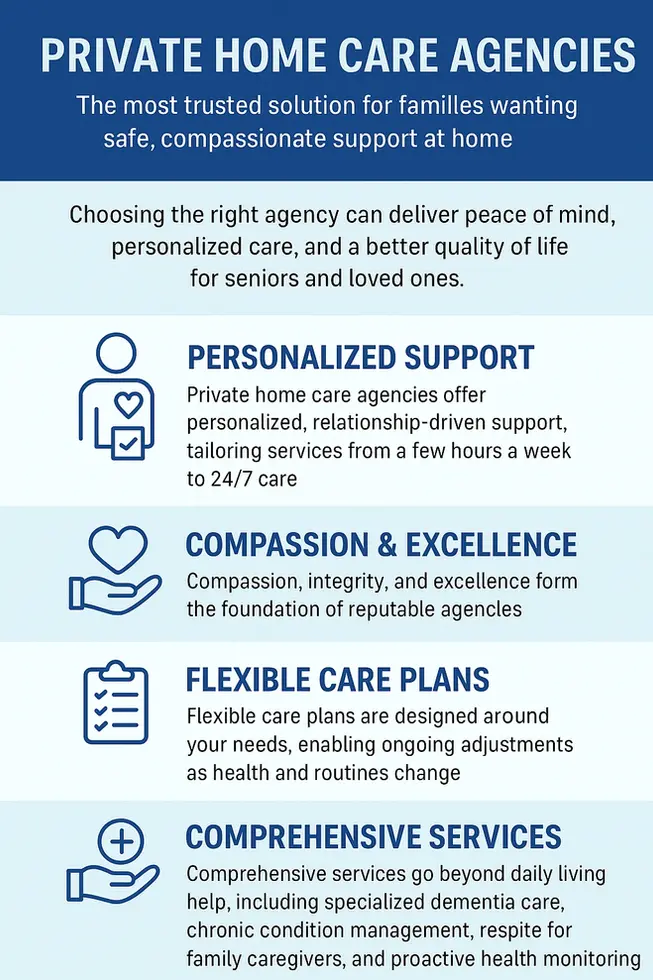
Private Home Care Agencies are becoming the most trusted solution for families who want safe, compassionate support at home while maintaining independence and dignity. Choosing the right agency can deliver peace of mind, personalized care, and a better quality of life for seniors and loved ones.
Private home care agencies offer personalized, relationship-driven support, tailoring services from a few hours a week to 24/7 care to empower seniors and individuals with disabilities to thrive comfortably at home.
Compassion, integrity, and excellence form the foundation of reputable agencies, ensuring every caregiver delivers empathetic, trustworthy, and high-quality care with each visit.
Flexible care plans are designed around your needs, enabling ongoing adjustments as health and routines change—reducing family stress and supporting true independence.
Comprehensive services go beyond daily living help, including specialized dementia care, chronic condition management, respite for family caregivers, and proactive health monitoring to prevent complications.
State licensing, background checks, and regular training are mandatory, giving families peace of mind that safety and quality standards are rigorously upheld.
Private home care is often more affordable and adaptable than residential care, with average hourly rates of $25–$35 in Oklahoma and clear, upfront pricing based on your unique needs.
Building lasting trust is key: Consistent caregivers foster emotional connections, while regular communication with families ensures care remains family-centric and responsive.
Comparing agency types is crucial:Private home care serves daily non-medical needs and companionship, while home health agencies provide skilled nursing or therapy—choose based on your specific situation and goals.
Thoughtful home care is about more than services—it's about dignity, connection, and quality of life. Explore the full article to discover how the right agency can make home the best place to be.
Introduction
Imagine this: Your parent or loved one wants to stay at home, surrounded by familiar comforts, but daily routines are becoming harder to manage alone. You’re not alone—
nearly 80% of adults over 65 say they want to “age in place,”
yet finding trustworthy, compassionate support can feel overwhelming. How do you ensure your family receives the dignity, flexibility, and warmth they deserve—without sacrificing safety or peace of mind?
Private home care agencies
are stepping in to meet this deeply personal need, offering families:
Flexible, tailored care plans that evolve as needs change
A focus on one-to-one relationships and emotional well-being
Direct access to carefully vetted caregivers who treat clients like family
With demand for in-home support soaring and trusted information scarce, understanding your options has never been more important.
Selecting the right agency is about more than checklists—it’s about finding a team that respects your values, honors independence, and communicates openly at every step.
In this guide, you’ll discover:
How private home care agencies work—and what sets them apart
The range of services available, from daily companionship to specialized care
Ways agencies ensure safety, quality, and the highest standards of care
Key questions to ask before choosing a provider
Selecting a caregiver isn’t just a logistical decision—it’s deeply emotional, rooted in the bonds that matter most.
“Personalized support, real relationships, and the promise of comfort in your own home—these are the pillars of outstanding home care.”
Let’s explore what truly compassionate, high-quality home support looks like—and how it can bring reassurance and renewed independence to every day.
Understanding Private Home Care Agencies
Private home care agencies are dedicated organizations that deliver
personalized, compassionate support
to individuals in the comfort of their own homes.
Unlike hospital-based or government-funded programs, these agencies primarily serve seniors, people with disabilities, or those recovering from illness—enabling them to maintain independence and dignity.
Clients and families can expect:
Non-medical or select medical services tailored to each person’s needs
Direct, private-pay agreements for flexibility and control
Relationship-driven care focused on trust and comfort
This highly adaptable approach has fueled a surge in demand:
nearly 80% of adults over 65 want to "age in place,"
making private home care an essential solution for modern families.
“Every interaction should feel like a partnership—focused on both health and happiness in your own space.”
How Private Home Care Differs
Private agencies set themselves apart from traditional providers by:
Prioritizing one-to-one support and emotional connection
Serving a broader range of needs, from daily tasks to companionship
Offering customized schedules, from a few hours a week to 24/7 care
Picture this: A caregiver arrives on a sunny morning in Laguna Hills, greeting Mrs. Davis with a smile, preparing her favorite breakfast, and assisting gently with her morning routine—her day starts tuned to her rhythm, not an institution’s timetable.
The Mission and Community Role
At their core, reputable agencies are anchored in these values:
Compassion: Every caregiver relationship is built on empathy
Integrity: Families place deep trust in consistent, vetted professionals
Excellence: Only the highest standards of care are accepted
Private home care agencies often become a
lifeline within a community
, filling gaps left by larger systems and providing a human touch that’s hard to find elsewhere.
Who Benefits—and How
A wide range of clients find value in private home care, including:
Older adults wishing to remain at home
People managing chronic health conditions
Individuals needing short-term help post-surgery or injury
Agencies work closely with families, creating
flexible care plans
that can evolve as needs change—reducing stress and offering reassurance every step of the way.
“Independence, dignity, and connection—these are the pillars of truly outstanding home care.”
Choosing a private home care agency means selecting
personalized, adaptable support
delivered with warmth, reliability, and a constant commitment to your loved one’s wellbeing.

Comprehensive Services Offered by Private Home Care Agencies
Private home care agencies
deliver a wide range of supports designed to meet each individual’s unique needs—right in the comfort of home. Families benefit from
tailored care plans
that adapt to changing health and routines, ensuring that every day is a safe, engaging, and dignified experience for their loved one.
How Services Are Designed Around You
Each care plan is built collaboratively by care managers, clients, and families.
Regular check-ins and open conversations keep everyone informed
Plans update as health, preferences, or needs change
Agency staff become trusted partners in daily life
Consistent communication reduces worry and strengthens relationships
"Imagine greeting a friendly face each morning, knowing your loved one has help with meals and conversation, and you have peace of mind—that’s private home care in action."
Companion and Personal Care
Companion and personal care
services form the foundation of most home care arrangements, focusing on both practical and emotional well-being.
Social engagement: walks, conversation, hobbies, and outings
Daily support: meal preparation, light housekeeping, and errands
Assistance with activities of daily living (ADLs): bathing, grooming, dressing, toileting, and mobility
These supports are shown to
reduce isolation
and keep seniors more active, helping prevent complications that can lead to emergency care.
"One caring meal and a shared story can brighten an entire week."
Specialized & Advanced Support Services
As needs become more complex, agencies provide:
Dementia and Alzheimer’s care: memory-boosting activities and gentle routines
Chronic disease support: reminders for medications, help managing medical routines
Monitoring for subtle changes in health, with timely reports to family and physicians
Signature wellness programs: fall prevention, exercise, or healthy aging plans
Picture this: A caregiver noticing a small health shift, alerting family, and preventing a serious hospitalization.
Respite & Family Caregiver Support
Caregiver relief is vital. Agencies offer:
Short- and long-term respite care to give family members a much-needed break
Emotional support, counseling, and stress management for loved ones
Regular care plan updates and flexible check-ins to adjust as needed
Families regain balance and wellbeing, reducing the risks of burnout and ensuring care remains focused on the individual. Private home care agencies combine
personalized support, ongoing communication, and expert care
—all designed to help seniors and families thrive at home. The result? Reliable independence, meaningful connections, and everyday peace of mind.
Regulations, Licensing, and Quality Assurance
Staying safe at home starts with
rigorous oversight
—every reputable private home care agency must comply with state licensing, background check, and insurance standards. These regulations help ensure clients receive care that’s both professional and secure, reflecting a commitment to
patient safety and peace of mind
.
Meeting State and Local Requirements
Each state sets its own rules, so your agency in Oklahoma or Laguna Hills, CA might navigate a different set of requirements than agencies elsewhere.
Essentials often include:
Licensure approval from state health departments
Caregiver fingerprinting and background checks
Proof of liability insurance and worker’s compensation coverage
Documentation of ongoing training and quality assessments
These rules frequently change. “Imagine the peace that comes when you know your parent’s caregiver has cleared not only state checks but additional agency standards.” Agencies must
regularly review regulations
, renew licenses, and adapt policies—so a trustworthy provider will have a process for staying
at the forefront of compliance
.
Ongoing Training and Supervision
Quality care isn’t static—it’s built on
continuous education
and supervision.
Leading agencies invest in:
Regular training on best practices, from infection control to dementia care
Monthly or quarterly reviews of care standards and procedures
Robust supervision and mentorship for every caregiver
Feedback loops: families are invited to share impressions, prompting swift adjustments when needed
Picture this: A care manager outlining a custom wellness plan and following up biweekly to monitor improvement—these practices translate to real, measurable reassurance.
Voluntary Certifications and What They Mean
Look for agencies with
voluntary certifications
—like Private Duty Home Care Certification—which signal extra layers of quality and a drive for
excellence beyond legal minimums
.
While not required everywhere, these designations reassure families that:
Agency training exceeds state mandates
Ongoing audits are in place to verify quality
Agency leadership is proactive about improvement
Key insight: Because there’s no national standard, families should always ask how an agency goes above baseline rules to ensure consistent, compassionate care. Agencies that invest in
up-to-date training, transparent compliance, and client-driven feedback
stand out for their commitment to care quality—making it easier for families to trust their loved ones are in good hands.
Benefits of Choosing a Private Home Care Agency
Choosing a
private home care agency
means tailoring support to your loved one’s unique needs. Clients aren't just numbers—each care plan is shaped around daily routines, comfort preferences, and personal history. Families often say, “Our caregiver feels like part of the family, not just a visitor.” You’ll notice the difference when familiar faces return consistently, building
genuine trust and emotional comfort
.
Enhanced Independence and Quality of Life
In their own homes, seniors and adults with disabilities enjoy:
Independence in a familiar environment—homes full of memories, favorite chairs, and beloved pets
Flexible routines that let them rise, eat, and rest at their own pace
Ongoing connection with their neighborhood and community
A recent report found that 87% of adults want to stay home as they age, making in-home care the
preferred pathway to aging in place
.
Flexible Scheduling and Relationship-Driven Support
Private agencies offer:
Care on your terms: hourly, daily, or custom package rates to fit any need
Adaptable schedules that adjust as health or family needs change
The same caregiver, allowing trust and relationship to deepen
Picture this: A senior enjoys homemade soup, walks in their garden, and laughter with a caregiver who knows their life story.
Financial Considerations and Cost Effectiveness
Private home care is often
more affordable than residential facilities
for many families.
Here’s what to expect:
Hourly rates average $25–$35 in Oklahoma, with daily rates often lower than full-time facility care
No surprise bills—just clear, upfront pricing
Services can be matched to budget, so you only pay for what you need
Home care becomes the
smart financial choice
when round-the-clock nursing isn’t required but
support and companionship are priceless
.
Prevention, Comfort, and Emotional Support
Evidence shows private home care delivers:
30% fewer hospitalizations for seniors with ongoing in-home support
Lower rates of complications thanks to meds reminders and monitoring
Companionship that reduces loneliness and improves mental well-being
One client’s daughter shared: “Dad’s smile came back the first week his new caregiver arrived.”
The heart of private home care is
personalized support that honors dignity, independence, and connection
—in the home your loved one treasures. Choosing the right agency isn’t just about services; it’s about quality of life, trusted relationships, and the peace of mind that comes from compassionate care right where it matters most.
Key Challenges Facing Private Home Care Agencies
Private home care agencies play a crucial role in helping seniors and individuals with disabilities remain at home, but they face unique challenges in a landscape of
rising demand and complex regulations
.
Agencies must constantly adapt to new state licensing requirements, background check protocols, and insurance mandates—policies that can change multiple times each year.
Picture this: an agency administrator juggling caregiver scheduling, responding to evolving regulations, and ensuring every family receives the comforting, professional care they expect.
Navigating Staffing Shortages and High Turnover
Staff turnover rates in home care can exceed
65% annually
, and finding compassionate, reliable caregivers isn’t easy. When an agency loses experienced caregivers, it risks
interruptions in care consistency
, making it tough for clients to build trust and meaningful relationships.
Common staffing challenges include:
Recruiting enough skilled caregivers for expanding caseloads
Retaining team members when other industries offer higher wages
Managing caregiver burnout, especially with increasingly complex client needs
“Continuity of care means everything to our families — that’s why every caregiver counts.”
Maintaining Quality Assurance Through Growth
As demand for home-based care soars—over
10,000 Americans turn 65 every day
—agencies must keep quality consistent across a growing team.
Key quality assurance strategies:
Routine caregiver training and skills evaluations
Regular supervisory visits and client feedback surveys
Implementing care standards that reflect agency values of compassion and excellence
Every agency strives to make sure “every home visit delivers the dignity, respect, and warmth families expect from us.”
Managing Liability, Insurance, and Reputation
Liability risks for agencies are real—insurance coverage lapses or insufficient policies can jeopardize families and businesses alike.
Key risk management steps include:
Maintaining up-to-date liability insurance policies
Conducting thorough background checks and reference verifications
Training staff on safety protocols and emergency response methods
In a competitive market,
building trust comes from a spotless reputation and responsive support
.
Recruiting and Retaining Compassionate Caregivers
The heart of exceptional home care lies in
attracting and recognizing dedicated team members
.
Successful agencies focus on:
Offering competitive pay and recognition programs
Ongoing professional development opportunities and peer mentoring
Creating a supportive, mission-driven culture where caregivers feel valued
“Recognized caregivers become the anchors of trust for every family we serve.”
Ensuring Communicative, Family-Centric Care
For families, open communication with the agency and care team is non-negotiable.
Proven strategies include:
Assigning a consistent care manager as the single point-of-contact
Scheduling regular check-ins and care plan updates with families
Coordinating with other healthcare providers to streamline transitions
“In home care, clear, heartfelt communication is just as important as the care itself.” Agencies that thrive in today’s home care environment
navigate evolving regulations, build a trusted workforce, and keep families at the center of every decision
. Consistency, open dialogue, and a caring touch are the pillars of trust that set the best agencies apart.
Comparing Private Home Care Agencies With Home Health Agencies
Choosing in-home care is a big leap—knowing which agency best fits your needs starts with understanding how private home care agencies and home health agencies differ.
Private home care agencies
focus on everyday, non-medical assistance and companionship, while
home health agencies
deliver skilled nursing and therapy, often covered by Medicare.
Core Differences in Services and Oversight
Picture this: A loved one needs help with bathing, meals, and getting around, but doesn’t require IVs or wound care—
private home care is your best fit.
If they need injections, physical therapy, or have just left the hospital,
home health
steps in.
Here’s a handy side-by-side chart:
| Feature | Private Home Care | Home Health Agency |
|------------------|----------------------------|-------------------------------|
| Primary Service | Non-medical support | Skilled medical care |
| Funding | Private pay | Medicare, Medicaid, insurance |
| Scheduling Flex | As-needed, client-driven | Physician-ordered, time-limited|
| Regulation | State licensure, optional certs | Federal (Medicare) oversight |
| Population | Seniors, chronic, disabled | Homebound, complex needs |
Key scenarios:
Daily companionship or errands? Private care keeps life comfortable at home.
Recovering from surgery or managing new meds? Home health brings the nurse or therapist to your door.
Navigating the Decision Process
Families often wonder: How do I pick the right agency?
Start with these essential questions:
What specific care needs (medical vs. non-medical) must be met?
Is flexible, ongoing support important—or will medical oversight be short-term and intensive?
Does the agency prioritize compassion, integrity, and communication that align with our family’s values?
What background checks, training, and supervision do caregivers receive?
How does the agency involve families in creating and adjusting care plans?
“The best care plan is the one that fits both your heart and your daily life.”
Tip:
Ask to meet the care manager or nurse before committing—trust builds with personal connection.
Choosing between private home care and home health is more than checking boxes—it’s about comfort, reliability, and finding an approach that brings peace of mind to families every day. Matching care to real-life needs is the surest way to empower loved ones to thrive at home.
Conclusion
Choosing private home care is about far more than meeting care needs—it's a commitment to independence, dignity, and the warmth of life at home for you or your loved one. Skilled caregivers and transparent agencies transform everyday support into genuine peace of mind, all built on the foundation of compassion and trust. You have the power to shape an environment where your family member feels seen, valued, and comfortable every day.
Selecting the right private home care agency means creating a personalized care experience anchored in respect, safety, and authentic connection.
The right fit can turn uncertainty into confidence and daily routines into cherished moments.
---
Key Takeaways:
Prioritize agencies that value compassion and integrity—look for transparent communication and consistent caregivers.
Request detailed information about licensing, training, and quality assurance protocols before making your decision.
Customize care plans to match evolving health needs and personal preferences, ensuring flexibility over time.
Advocate for open family involvement with regular check-ins and feedback to tailor support as situations change.
Compare agency offerings for cost transparency and ensure the services align with your loved one's daily lifestyle and values.
---
Next Steps:
Reach out to at least two reputable private home care agencies in your area to discuss your family’s unique needs.
Schedule a meet-and-greet with a potential caregiver or care manager—personal rapport will guide your choice.
Prepare a list of priorities (medical, social, emotional) to share with agencies during consultations.
Ask detailed questions about background checks, caregiver training, and how emergencies are handled.
---
Every family deserves care that feels personal, gentle, and empowering.
By taking action today—with compassion as your compass—you can brighten the path to independence, joy, and meaningful connection at home.
“Choosing compassionate home care isn’t just a service—it’s a promise of dignity, comfort, and hope for those you love most.”
FAQ
1- How do Private Home Care Agencies differ from home health care? Private Home Care Agencies focus on non-medical daily support like dressing, bathing, and companionship. For medical care such as nursing or physical therapy, families may need home health services. Learn how services
2- What is the cost of Private Home Care Agencies in 2025? Most families in the U.S. pay $25–$40 per hour, depending on location and care needs. Full breakdown: Seniors Home Care Services: Comprehensive Guide 2025
3-Are caregivers trained and background-checked? Yes — reputable agencies require:
State licensing compliance
Clear background checks
Ongoing professional training Verified guidance from the Administration for Community Living.
4- Can Private Home Care Agencies provide specialized care like dementia support? Yes. Many agencies offer Alzheimer’s & dementia-specific services, fall-prevention strategies, and chronic condition support.
5 Do families get updates and involvement in the care plan? Absolutely. Family communication is a core benefit of Private Home Care Agencies — care plans are reviewed and adjusted regularly.


Comments